
 By
By Everything your study guide didn’t tell you about Animal Farm by George Orwell.
Ah, Animal Farm, simultaneously one of the most widely-read and most widely-misunderstood books in the English-speaking world—or so it often seems to me.
In high school, a self-professed Orwell aficionado, I thought I knew all about what Animal Farm was trying to say: Communism is ontologically evil because it always leads to totalitarianism. But that’s not quite it. (Stay tuned for when I eventually write an essay about why Animal Farm is absolutely not pro-capitalist)
Animal Farm is very intentional and specific allegory for the Russian Revolution and formation of the USSR, written by a leftist writer who nevertheless had become disillusioned with the Soviet Union. It was a published in 1945, at a time when criticizing the USSR was deeply unpopular among leftists in Western capitalist nations, but, well, Orwell had a bone to pick with Stalin in particular.
The first section of this post will go through the characters in Animal Farm and the real-life historical individuals and groups they represent. The second section will analyze the key plot points in the story and their relationships to real events in the history of the Soviet Union.
Characters in Animal Farm
Old Major: Marx (and Engels), and/or Lenin
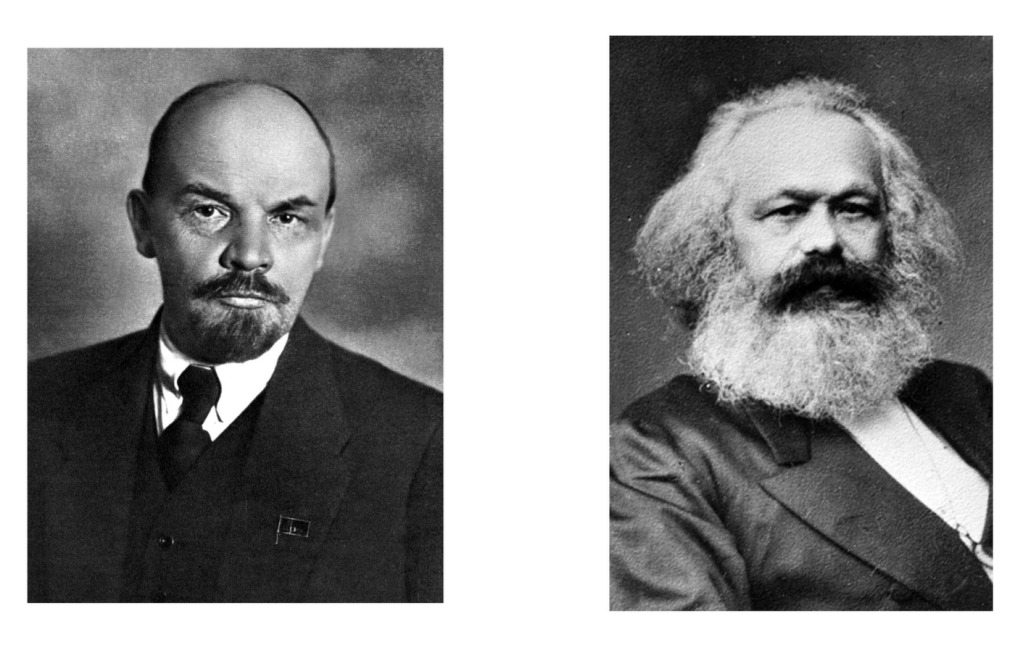
Many of the analyses of Animal Farm that I’ve seen online compare Old Major to both Karl Marx and Vladimir Lenin, since Lenin’s thought was formative in the ideology of the Bolsheviks specifically, but in my own opinion, Old Major is a better allegory for Marx (and Engels) based on his role in the story.
Old Major is a wise and elderly “prize middle white boar” who in the first scene of Animal Farm, assembles the animals to a clandestine meeting. Addressing the group as “comrades” he delivers a lengthy monologue about his dissatisfaction with the animals’ exploitation and his prescient dream about a future farm in which the animals, not the humans, control their labor.
“Now, comrades, what is the nature of this life of ours? Let us face it: our lives are miserable, laborious and short. We are born, we are given just so much food as will keep the breath in our bodies, and those of us who are capable of it are forced to work to the last atom of our strength; and the very instant that our usefulness has come to an end we are slaughtered with hideous cruelty…..
But is this simply part of the order of nature?…. No, comrades, a thousand times no!
….Why then do we continue in this miserable condition? Because nearly the whole of the produce of our labor is stolen from us by human beings…. Man is the only creature that consumes without producing. He does not give milk, he does not lay eggs, he is too weak to pull the plough, he cannot run fast enough to catch rabbits. Yet he is lord of all the animals. He sets them to work, he gives back to them the bare minimum that will prevent them from starving, and the rest he keeps for himself.”
If you substitute “human” for “capitalist” and “animal” for “worker,” Old Major’s analysis is basically Marxism in an (oversimplified) nutshell. According to Old Major, the current system is unjust because humans profit from surplus-value generated by the animals, who don’t get access to the fruits of their labor, and the ruthless profit motive drives the humans to exploit the animals to the maximum degree.
The ideology formed from Old Major’s ideas is giving the name Animalism, and the song that the animals sing throughout the story, “Beasts of England”, becomes its anthem. Maybe the closest specific real-world reference would be The Communist Manifesto. Workers of the world, beasts of England, same difference, right?
The Pigs: the Bolsheviks
The other pigs in Animal Farm are an allegory for the Bolshevik party, the group that took over in the Russian Revolution in 1917. They were led by Vladimir Lenin, whose idea of democratic centralism shaped their organizational strategy.

The idea of democratic centralism is developed in Lenin’s What Is To Be Done? (1902) in which he argues for the necessity of a vanguard party of people well-versed in Marxist theory, basically “professional revolutionaries”. Lenin thought this was needed because the average worker would not have the requisite knowledge of political economy to successfully organize. (Among other things, this was one of the reasons for the ideological split between the Bolsheviks and the Mensheviks) In this vanguard party, the Bolsheviks, leadership would be highly centralized in order to best effect the revolution, and dissent would be minimized. During the fraught transition from Capitalism to Communism, this party would wield its authority as a dictatorship of the proletariat. Marx and Engels first used this term in a more rhetorical sense, but Lenin took it in a more explicitly authoritarian direction.
In Animal Farm, the pigs are the smartest animals and have the most developed writing and reading skills. Thus, they take on the role of planning and executing the revolution and comprise the leadership of the new Animal Farm.
“It was always the pigs who put forward the resolutions. The other animals understood how to vote, but could never think of any resolutions of their own.”
Napoleon and Snowball: Stalin and Trotsky
While the pigs in Animal Farm broadly represent the Bolsheviks, Napoleon is specifically a stand-in for Josef Stalin and Snowball for Leon Trotsky.
“It was noticed that these two were never in agreement: whatever suggestion either of them made, the other could be counted on to oppose it.”
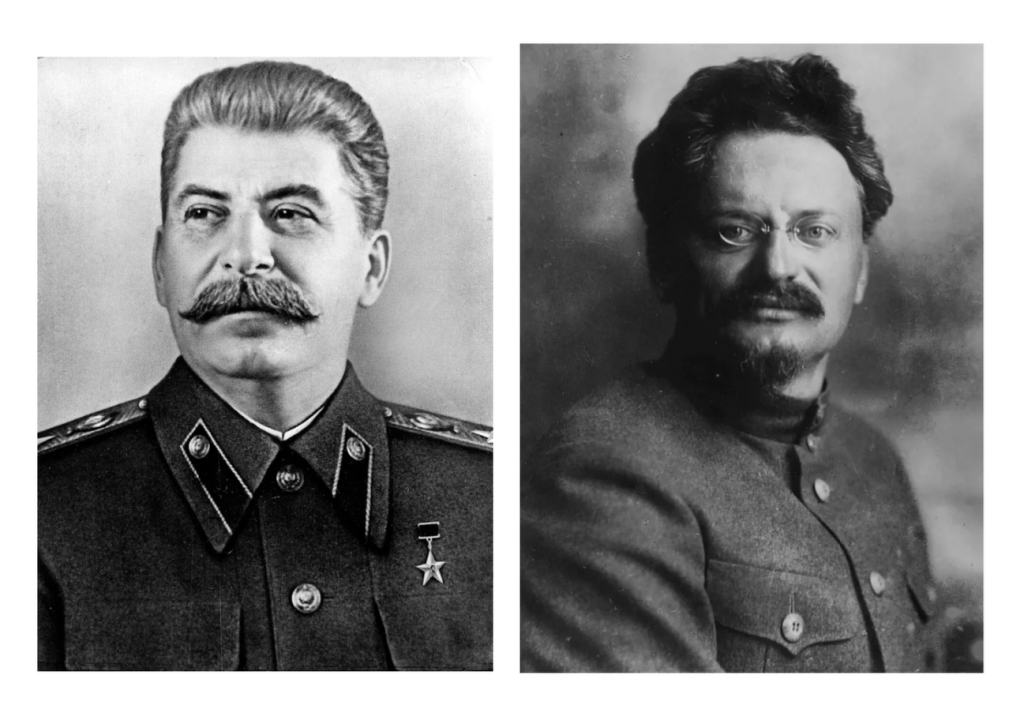
Stalin and Trotsky famously had a political (and tbh it seems quite personal too) falling out.
One of the main ideological differences between them was Stalin’s focus on socialism in one country, which contrasted with Trotsky’s idea of permanent revolution. Basically, Stalin wanted to focus on building up Russia’s nascent new system, whereas Trotsky believed that without revolutions spreading to the rest of the world, a revolution in a single nation would not last.
Likewise, in Animal Farm, Snowball wants to prioritize spreading the revolutionary spirit to the animals on other farms, while Napoleon is concerned alone with managing Animal Farm.
“According to Napoleon, what the animals must do was to procure firearms and train themselves in the use of them. According to Snowball, they must send out more and more pigeons and stir up rebellion among the animals on the other farms. The one argued that if they could not defend themselves they were bound to be conquered, the other argued that if rebellions happened everywhere they would have no need to defend themselves.”
This Sparknotes page points out that the “Domino Theory”—the idea of the Western capitalist government that the emergence of the USSR would trigger other countries to follow suit in revolution—is similar to the “snowball effect”

In the novel, the tension between Napolean and Snowball comes to a head when some of the farm’s dogs, at Napolean’s direction, chase Snowball off of Animal Farm. This is a reference to how Stalin exiled Trotsky from the USSR in 1926. Fourteen years later the NKVD caught up to where he was hiding in Mexico and assassinated him.
The Snowball-Napoleon rivalry is one of the biggest plot points in Animal Farm and includes some of the most targeted satire, which makes sense when you realize that Orwell fought in the Spanish Civil War alongside a Trotskyist faction that was later betrayed by the other prevailing leftist party, a Stalinist party that was backed by the USSR. (I am working on an analysis of Orwell’s memoir Homage to Catalonia that analyzes how this influenced both Animal Farm and 1984)
So clearly, Orwell developed a (quite valid, in my opinion) vendetta against Stalin and, by extension, against the Soviet Union, and Animal Farm is written as an expression of this.
Beyond his infamous repression of dissidents, Stalin is also often criticized by the left for deviating from what Communism was supposed to be. After all, the Soviet Union was never a stateless, classless or moneyless society. In Animal Farm, the original revolutionary fervor of Animalism is diluted as Napoleon and the other pigs become the new ruling class, adopt the lifestyle perks of humans, and go back to trading with other farms.
Squealer: Pro-Stalin/Pro-Soviet Propagandists
Squealer represents the propaganda machine of the Soviet government, especially the Pravda.
From the beginning, Squealer rationalizes the pigs’ hoarding of resources. As Napoleon further consolidates power and conditions on Animal Farm deteriorate, Squealer helps bolster the morale of the other animals and supports Napoleon in moving the goalposts regarding Animal Farm’s initial goals.
“[Squealer] assured them that the resolution against engaging in trade and using money had never been passed, or even suggested. It was pure imagination, probably traceable in the beginning to lies circulated by Snowball. A few animals still felt faintly doubtful, but Squealer asked them shrewdly, ‘Are you certain that this is not something that you have dreamed, comrades? Have you any record of such a resolution? Is it written down anywhere?'”
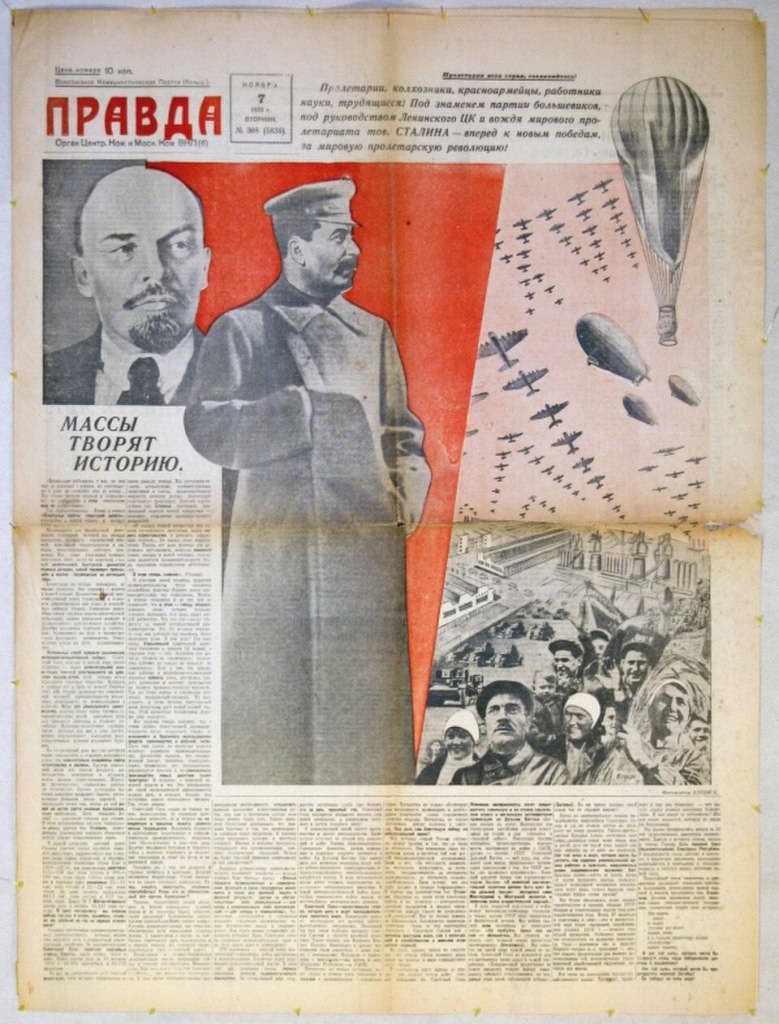
The Four Dissenting Pigs: Old Bolsheviks Executed in Stalin’s Purges
Stalin’s purges targeted many people who were in the Bolshevik party and had been involved in the original revolutionary project.
In Animal Farm, there are four unnamed pigs who are referenced a few times: first, raising objections to Napoleon in a meeting, and later, being mauled to death by the dogs. They represent members of the party apparatus who were imprisoned/tortured/executed on allegations of being counter-revolutionary by Stalin.
The Humans: Capitalists
“At first they pretended to laugh to scorn the idea of animals managing a farm for themselves. The whole thing would be over in a fortnight, they said. They put it about that the animals on the Manor Farm (they insisted on calling it the Manor Farm; they would not tolerate the name ‘Animal Farm’) were perpetually fighting among themselves and were also rapidly starving to death. When time passed and the animals had evidently not starved to death, Frederick and Pilkington changed their tune and began to talk of the terrible wickedness that now flourished on Animal Farm”
Mr. Jones: Tsar Nicholas II
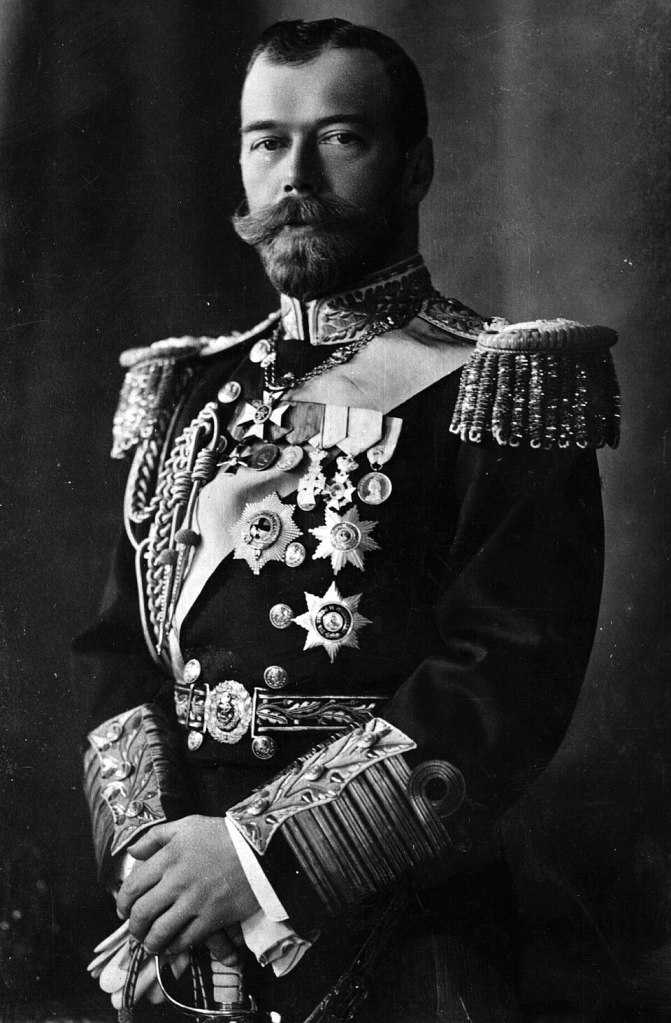
He represents Tsar Nicholas II, who headed the Romanov dynasty as the ruler of Russia until his deposition in 1917 during the February Revolution.
Mr. Frederick: Adolf Hitler (Nazi Germany)
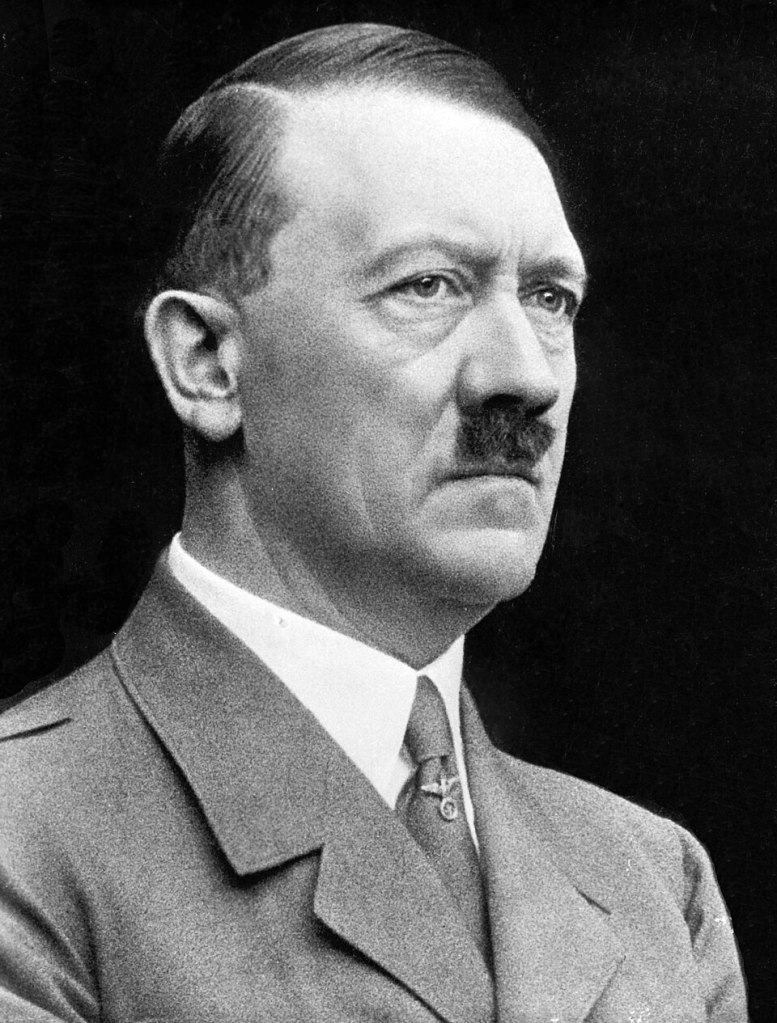
In Animal Farm, Mr. Frederick is the human who heads the neighboring farm of Pinchfield. The animals of Animal Farm hear concerning rumors about the treatment of the animals at Pinchfield Farm, but nevertheless Napoleon works out an alliance with Mr. Frederick. This is, of course, a reference to the Molotov-Ribbentrop Pact (also called the German-Soviet Pact or German-Soviet Non-Aggression Pact).
Later, Mr. Frederick turns on Animal Farm and attacks them, leading to a prolonged and intense fight that results in the windmill’s total destruction.
Mr. Pilkington: Leaders of Western Capitalist Countries (Especially the United Kingdom and United States)
Mr. Pilkington runs the neighboring farm of Foxwood. He is suspicious of Animal Farm and fears the spread of Animalism to his own animals.
Other Animals: Citizens / Workers
In Animal Farm, the animals besides the pigs are used to represent various groups of people in Soviet society (and in general). They represent the ordinary citizens within the system—aka the workers.
The Dogs: The Police State
The literal attack dogs of Napoleon, the dogs in Animal Farm represent the security apparatus of the state, most closely the NKVD (Later the KGB) They are the violent arm of the state that intimidates and kills dissidents.
Moses: The Religious Establishment
Moses, the raven, spins comforting stories about a paradise called Sugarcandy Mountain, where all of the animals will go after they die. It is a pretty obvious reference to religious concepts of the afterlife.
Marx famously wrote in A Contribution to the Critique of Hegel‘s Philosophy of Right (1843) that “religion is the opium of the people”, meaning that it is used to placate suffering populations into accepting the conditions thrust upon them by capitalism by providing a comforting narrative about the rewards that await after death. The Bolsheviks were explicitly atheist.
“The animals hated Moses because he told tales and did no work, but some of them believed in Sugarcandy Mountain, and the pigs had to argue very hard to persuade them that there was no such place.”
Mollie: The Bourgeoisie
Mollie, a white mare, represents the bourgeoisie class of the old capitalist society. This would be rich people, nobility, etc.—people who benefitted from the Tsarist system and who felt the effects of the revolution as a downgrade.
Mollie enjoyed privileges and special treatment from Mr. Jones, and is unhappy with the revolution. She dislikes working and can no longer access the extravagance she used to have, like ribbons, so she eventually defects from Animal Farm and flees to Foxwood.
The Horses: The Workers
The horses, Boxer and Clover, represent the workers writ large—people who were faithful in the revolutionary project and devoted themselves to labor in service of building up the new system but who were ultimately seen as disposable by the leadership.
At the end of Animal Farm, Boxer is sent to slaughter by Napoleon.
The Sheep: The Brainwashed Public
The sheep, referenced in Animal Farm for their propensity to repeat Napoleon’s favorite slogans— first “Four legs good, two legs bad” and then, by the end, “Four legs good, two legs better”— represent the members of ordinary society who believed and argued for the talking points of the Soviet Union.
In Orwell’s view, these people did not truly understand what they were repeating, hence the sheep metaphor. Colloquially the comparison to sheep is meant to portray someone as prone to mindlessly repeating propaganda, and that is definitely the broader subtext here too.
Muriel and Benjamin: Aware but Powerless or Disaffected Citizens (Likely Intellectuals)
In Animal Farm Muriel (a goat) and Benjamin (a donkey) are both able to read and write and are more aware of the pigs’ power grabs than the other animals, which indicates that they may represent intellectuals/educated classes. Despite this, Muriel is powerless to push back when the pigs lie, while Benjamin’s cynical worldview precludes him from action.
“Windmill or no windmill, he said, life would go on as it had always gone on−that is, badly.”
The Hens: Peasants Who Resisted Collectivization
In Animal Farm, some of the hens rebel after Napoleon tries to sell their eggs. This is a reference to the uprisings of peasants against Stalin’s collectivization initiatives. During the implementation of Stalin’s Five Year Plans, the Soviet government attempted to seize agricultural land from peasants, who responded with armed resistance.
Other Key Events and Symbols in Animal Farm
Animalism
Communism. (Duh)

The Rebellion: The Russian Revolution, including both the February Revolution and the October Revolution
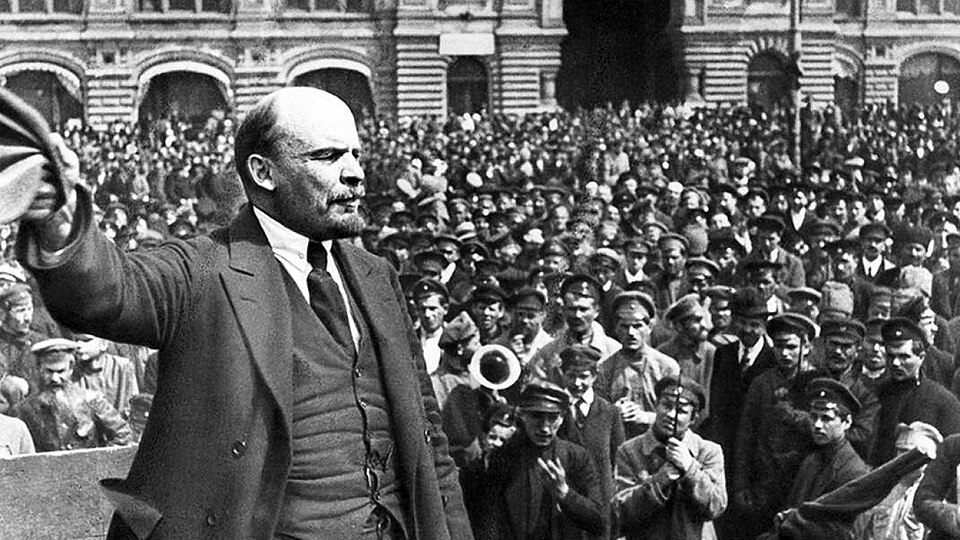
There were actually two different revolutions in Russia in 1917. The first, the February Revolution, was an uprising that deposed Tsar Nicholas II and established a provisional government. Later in the same year, the Bolsheviks overthrew the provisional government in the October Revolution, eventually leading to the Union of Soviet Socialist Republics (USSR), aka the Soviet Union, which was officially founded in 1922 under the leadership of the Bolsheviks, now called the Russian Communist Party.
In Animal Farm, the two revolutions are combined into a single event, in which the animals chase Mr. Jones off Manor Farm and rename it to Animal Farm.
The Battle of Cowshed: The Russian Civil War
After the Bolsheviks seized power in 1917, Russia descended into a multi-year civil war. The White Army sought to re-establish the monarchist system while the Red Army wanted to keep the new Bolshevik leadership. World War I was still in full swing at this point, and the Allied powers intervened in the civil war on the side of the White Army (albeit on a small scale).
In Animal Farm, this is represented by the Battle of Cowshed, in which Mr. Jones returns, joined by the leadership of the neighboring farms, in an attempt to wrest back control of Animal Farm after the revolution.
The Windmill
The windmill seems to be a representation of the Soviet Union’s economy and general functionality as a state. It can be considered a more specific allegory for Stalin’s Five-Year Plans, which sought to facilitate the USSR’s rapid industrialization and the collectivization of agriculture.
Executions by the Dogs: The Moscow Show Trials/Stalin’s Purges
After the generational falling out with Trotsky, Stalin weaponized the growing police-state apparatus to crack down on supposed infiltrators. There was a growing narrative that people within the government were acting on behalf of Trotsky to sabotage Stalin’s government.
The Great Purge refers to the period between 1936 and 1938 where the Soviet intelligence apparatus engaged in mass arrest, torture, deportation, imprisonment and execution of suspected dissidents. The Moscow Show Trials (also called Moscow Trials or Moscow Purge Trials) were highly publicized trials of some of these accused people, mostly long-term members of the Bolshevik party.
In Animal Farm, the Great Purge and the Moscow Show Trials are depicted in the scene where Animal Farm holds a meeting and a few animals come forward to confess crimes against Napoleon, after which they are killed by (literal) attack dogs of Napoleon.
In real life, victims of the show trials confessed to the crimes of which they were accused; however these confessions were of dubious veracity, likely coerced by prolonged and varied torture and threats.
One group of victims in this scene is a group of four pigs who were referenced earlier in the story in a scene where they push back on one of Napoleon’s policies. This is a specific allusion to the Bolsheviks, often people who had directly participated in the original revolution, who were targeted in the purges.
“Without any further prompting they confessed that they had been secretly in touch with Snowball ever since his expulsion, that they had collaborated with him in destroying the windmill, and that they had entered into an agreement with him to hand over Animal Farm to Mr. Frederick. They added that Snowball had privately admitted to them that he had been Jones’s secret agent for years past. When they had finished their confession, the dogs promptly tore their throats out, and in a terrible voice Napoleon demanded whether any other animal had anything to confess.“
The other animals killed in this scene, including some hens and a sheep, represent the many ordinary Soviet citizens who were never in the Bolshevik party or involved in the political power struggle but still became victims of the purges and show trials.
Napoleon also pronounces the death sentence upon Snowball for treason, even though Snowball had already been chased off of Animal Farm. Stalin did the same with Trotsky, with Trotsky eventually being assassinated in Mexico in 1940.
The Battle of the Windmill: World War II (The Eastern Front/Operation Barbarossa)
In 1941, Hitler went back on the previous non-aggression pact he had with Stalin and decided to try to invade the Soviet Union in Operation Barbarossa, motivated by a desire for “Lebenstraum” (and also genocidal intent against Russian Jews and Slavic people writ large)
The Soviet Union managed to hold it down and beat back the Nazis, but they suffered catastrophic damage. The USSR had the most deaths by far out of any country in World War II, and the Eastern Front of the war was notoriously brutal.

In Animal Farm, the attack by Mr. Frederick leads to a prolonged struggle, and though Animal Farm ultimately emerges victorious, the Windmill is totally destroyed in the conflict, later named the Battle of the Windmill.
Further Reading
If you’re interested in criticism of the Soviet Union in general from a leftist perspective, here are some suggestions for further reading:
Homage to Catalonia by George Orwell (my review)
My Disillusionment in Russia by Emma Goldman
The Bolshevik Myth by Andrew Berkman
“The Russian Revolution” by Rosa Luxemburg
The Revolution Betrayed by Leon Trotsky
“The State is Counter-Revolutionary” by Daniel Baryon, specifically the USSR episodes
If you for whatever reason read to the end of this post, first of all, I’m impressed… second of all… thanks for reading! This post was a long time in the making, but political philosophy is one of my main interests, the Russian Revolution has been one of my historical hyperfixations for a really long time, and Orwell has been one of my favorite writers for an even longer time, so writing this post was basically inevitable.
Sources for claims are linked in the text. (That said, please leave a comment if something looks incorrect!)
 Frappes and Fiction