
 By
By Trust me: don’t start with American Psycho.
There is a sort of voyeuristic allure to Bret Easton Ellis novels for me. For whatever reason, I love to read about hypersexual nihilists with far too much money and far too much access to cocaine.
Honestly, maybe the critics are right and he is the ultimate edgelord author, but I have this thing where I am endlessly fascinated by reading about terrible people doing terrible things—maybe out of some subconscious desire to make sense of human capacity for evil, or maybe just because of pure morbid curiosity. Of course, the satire in his work is also heavy, and that adds another layer of allure.
Anyway, I believe that there is an optimal order in which to read Bret Easton Ellis’s books, especially because they all take place in a shared universe, with characters making cameos in other novels. Most people tend to start with American Psycho, and in my opinion that is a huge mistake.

In this post I will be discussing the seven published novels of Bret Easton Ellis: Less Than Zero, The Rules of Attraction, American Psycho, Glamorama, Imperial Bedrooms, Lunar Park and The Shards, along with my thoughts on which order is best to read them in.
Behold, the objectively correct reading order:
1) To Read First: Less Than Zero (1985)
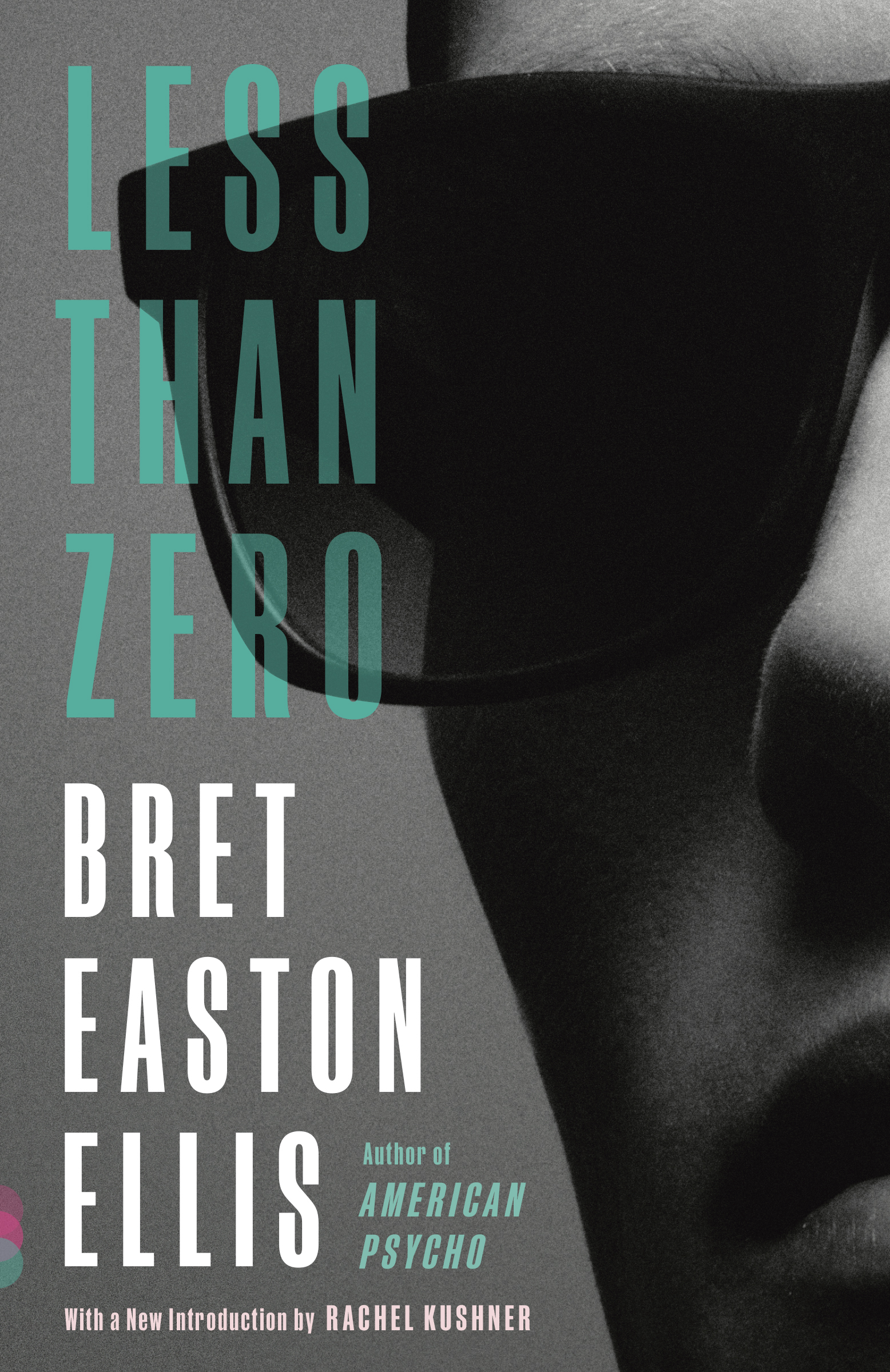
Synopsis (from Goodreads):
“Clay comes home for Christmas vacation from his Eastern college and re-enters a landscape of limitless privilege and absolute moral entropy, where everyone drives Porches, dines at Spago, and snorts mountains of cocaine. He tries to renew feelings for his girlfriend, Blair, and for his best friend from high school, Julian, who is careering into hustling and heroin. Clay’s holiday turns into a dizzying spiral of desperation that takes him through the relentless parties in glitzy mansions, seedy bars, and underground rock clubs, and into the seamy world of L.A. after dark.“
“Disappear Here.
The syringe fills with blood.
You’re a beautiful boy and that’s all that matters.”
Ellis’s first novel, written when he was only 19, is definitely the book I would tell people to start with. It is a really good introduction to the vibe of his work and introduces a lot of the themes of nihilism, excess and alienation that he explores throughout his novels.
Read my full review here (spoiler-free)
2) To Read Second: The Rules of Attraction (1987)
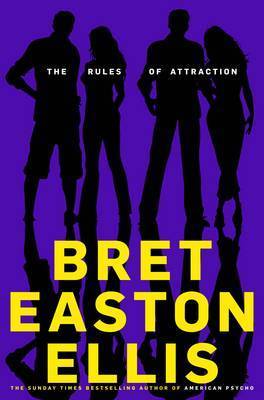
Synopsis (from Goodreads):
“Set at an affluent liberal arts college during the height of the Reagan eighties, The Rules of Attraction follows a handful of rowdy, spoiled, sexually promiscuous students with no plans for the future—or even the present. Three of them—Sean, Paul, and Lauren—become involved in a love triangle of sorts within a sequence of drug runs, ‘Dressed to Get Screwed’ parties, and ‘End of the World’ parties.”
“What else is there to do in college except drink beer or slit one’s wrists?”
This is my personal favorite of Bret Easton Ellis’s novels. I read it in college, and while I wasn’t engaging in quite the level of debauchery as the characters in the book (especially being ace), I definitely got the vibe. It’s based on BEE’s own experience at an elite liberal arts college—coincidentally, the same school that inspired Donna Tartt’s The Secret History. (Wow, that must have been some school)
It follows three main characters: Paul, Lauren, and Sean— Sean Bateman, that is, canonically the brother of Patrick Bateman from American Psycho—as they seek to fill a vacuum in their lives with sex, drugs and partying while trying and failing at real romantic connection. Clay from Less Than Zero also makes an appearance.

3) To Read Third: Imperial Bedrooms (2010)
Synopsis (from Goodreads):
“Clay, a successful screenwriter, has returned from New York to Los Angeles to help cast his new movie, and he’s soon drifting through a long-familiar circle. Blair, his former girlfriend, is married to Trent, an influential manager who’s still a bisexual philanderer, and their Beverly Hills parties attract various levels of fame, fortune and power. Then there’s Clay’s childhood friend Julian, a recovering addict, and their old dealer, Rip, face-lifted beyond recognition and seemingly even more sinister than in his notorious past.
But Clay’s own demons emerge once he meets a gorgeous young actress determined to win a role in his movie. And when his life careens completely out of control, he has no choice but to plumb the darkest recesses of his character and come to terms with his proclivity for betrayal.“
“Keep everything young and soft, keep everything on the surface, even with the knowledge that the surface fades and can’t be held together forever – take advantage before the expiration date appears in the nearing distance.“
Imperial Bedrooms is the sequel to Less Than Zero. It takes place 25 years later, in 2010, and follows Clay as he crosses paths with his old friends Blair and Julian, and his old drug dealer Rip, in Los Angeles. While the characters’ evil in Less Than Zero is because of their passivity, in Imperial Bedrooms it has morphed into an active malevolence.
This may be a controversial pick to read third, but I stand by it because I personally suffer from being unable to remember what happened in the books I read for very long after reading them, and because I read Imperial Bedrooms over 2 years after Less Than Zero, I had to do a lot of refreshing.
Because it also contains references to The Rules of Attraction, I placed The Rules of Attraction ahead of it in the list as well.
4) To Read Fourth: American Psycho (1991)
Synopsis (from Goodreads):
“Patrick Bateman is twenty-six and works on Wall Street. He is handsome, sophisticated, charming and intelligent. He is also a psychopath. Taking us to head-on collision with America’s greatest dream—and its worst nightmare—American Psycho is a bleak, bitter, black comedy about a world we all recognize but do not wish to confront.“
“I like to dissect girls. Did you know I’m utterly insane?”
Now I will finally recommend you read American Psycho. It was the first Bret Easton Ellis book that I read, but I think I would have understood and enjoyed it far more if I had the context of his prior works.
There was a lot of controversy surrounding this novel when it came out, and to be honest, I definitely had a less-than-great impression of the book going into it. I expected it to be violently misogynistic. Obviously, you can write about things without endorsing them, and writing Patrick Bateman doesn’t mean you are Patrick Bateman,, but I had heard so much about toxic men who idolize the character that it kind of gave me a bad impression.
Also, also in contrast to my assumptions, American Psycho isn’t really a thriller, or what you’d think about with a book about serial killers. The novel makes much more sense when read in the context of BEE’s other work, because like his other novels, it centers around an unreliable narrator who is consumed by materialism and adrift in a world of moral apathy.
There is also a strong undercurrent of commentary on toxic masculinity and internalized homophobia which I only retroactively picked up on after reading BEE’s other novels. American Psycho is different from his other work in that the main character is not a self-admitted queer man. Rather, Patrick Bateman performs masculinity very aggressively.
I think that this book reads entirely differently if you have the context that nearly all of the author’s other books center around queer men who are struggling with internalized homophobia and lack of societal acceptance. Patrick Bateman is not the only misogynist narrator that Bret Easton Ellis has written. Nearly all of his protagonists have a weird view on women often because of the pressure they feel to perform sexuality.
With the advent of Clavicular, I’ve been begging someone to write an homage to American Psycho but centered around a persona from my generation, like our friend Brayden Peters. If Bret Easton Ellis wrote something like this himself it would absolutely be a banger.
If I re-read American Psycho, I’m totally going to write an analysis of this.
5) To Read Fifth: Glamorama (1998)
Synopsis (from Goodreads):
Victor Ward, a twenty-something model in fashion- and celebrity-obsessed Manhattan, is gradually, imperceptibly drawn into a shadowy looking-glass of that society, there and in London and Paris, and then finds himself trapped on the other side, in a much darker place where fame and terrorism and family and politics are inextricably linked and sometimes indistinguishable. At once implicated and horror-stricken, his ways of escape blocked at every turn, he ultimately discovers—back on the other, familiar side—that there was no mirror, no escape, no world but this one in which hotels implode and planes fall from the sky.
Glamorama is probably the Bret Easton Ellis book that I remember the least amount about, which is maybe because it is the most disconnected from his other work. While all of BEE’s books take place in a shared universe, I believe Patrick Bateman is the only recurring character to make an appearance in Glamorama, and it’s only a passing mention. I remember more about where I was reading it— on the subway in Manhattan— than what happened in it, because my physical setting matched the book. And like most of his books, I remember being utterly disgusted, yet transfixed.
From what I do remember of the novel, I would probably say that Glamorama is the closest thing in BEE’s ouevre to a thriller in the traditional sense. It follows a sprawling terrorism plot, but much of the book is also devoted to exploring the psyche of the characters. In that way, it kind of reminds me of Don DeLilo’s Mao II… though the comparison may be relatively surface-level.
6) To Read Sixth: Lunar Park (2005)
Synopsis (from Goodreads):
“Bret Ellis, the narrator of Lunar Park, is a writer whose first novel Less Than Zero catapulted him to international stardom while he was still in college. In the years that followed, he found himself adrift in a world of wealth, drugs, and fame, as well as dealing with the unexpected death of his abusive father. After a decade of decadence, a chance for salvation arrives; the chance to reconnect with an actress he was once involved with, and their son. But almost immediately his new life is threatened by a freak sequence of events and a bizarre series of murders that all seem to connect to Ellis’s past.”
Lunar Park is an interesting book. It’s quite experimental, a kind of pseudo-autofiction and metafiction with a divergence from BEE’s usual writing in its homage to Stephen King. There’s a lot more of the paranormal involved here.
The main character is Bret himself, or at least an unflattering self-portrait of him, grappling with being a father figure to his new wife’s children from a prior marriage. Then, a string of murders based on the crimes in American Psycho start happening, a new student of Bret’s looks a little too much like Clay, and it seems that the disturbing characters he created have somehow escaped the page…
While I think Ellis’s writing is stronger in other works, this was a fun read and I thought the way it used Bret-the-character to explore Bret-the-author’s misgivings about the perception and impact of his work to be really, really creative. Like I mentioned in the intro, he is often criticized for being overly edgy, and this book kind of interrogates that from the character-as-the-author’s own perspective, looking back at his work.
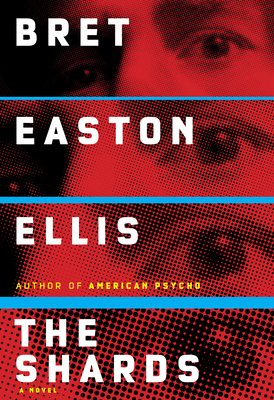
7) To Read Seventh: The Shards (2023)
Synopsis (from Goodreads):
“17-year-old Bret is a senior at the exclusive Buckley prep school when a new student arrives with a mysterious past. Robert Mallory is bright, handsome, charismatic, and shielding a secret from Bret and his friends even as he becomes a part of their tightly knit circle. Bret’s obsession with Mallory is equaled only by his increasingly unsettling pre-occupation with The Trawler, a serial killer on the loose who seems to be drawing ever closer to Bret and his friends, taunting them–and Bret in particular–with grotesque threats and horrific, sharply local acts of violence. The coincidences are uncanny, but they are also filtered through the imagination of a teenager whose gifts for constructing narrative from the filaments of his own life are about to make him one of the most explosive literary sensations of his generation.“
Finally, we have Bret Easton Ellis’s most recent novel: The Shards. I reviewed this one on my blog too, but it is a spoiler review that explicitly discusses the book’s ending. The spoiler-free Tl;dr is that I enjoyed the reading experience, but I felt that the plot leaned too far into the ambiguous.
Like Lunar Park, The Shards uses the author-as-a-character-in-the-book thing to blur the lines between fiction and reality, but unlike Lunar Park, it reaches further back to a time before Less Than Zero. I think this is a good one to read last, not only because it is the most recently-published, but also because it has a lot of exploration of BEE’s “origin story”—while the story is embellished and edgelord-ifed to all hell, there are some honest bits in it, like when Bret-the-character spends a lot of time reading Joan Didion’s Slouching Towards Bethlehem. It’s well-known that Joan Didion was one of the biggest stylistic influences on Bret Easton Ellis, which is probably why I like both of their writing styles.
Do you agree or disagree with my reading order? Feel free to leave your thoughts in the comments!
If you liked this post, consider subscribing to Frappes & Fiction. I post about the books I read (even if they’re not fiction), the books I think YOU should read, and anything else on my mind.

 Frappes and Fiction
This is a very interesting list of recommendations. I haven’t read these books, but I remember the movie(s) adaptation. Based on your description it doesn’t make sense to read, American Psycho, first.
LikeLiked by 1 person