
 By
By In my opinion, there is a limit to the amount of ambiguity that a story can sustain. If you cross the limit, it goes from being interesting and mind-bendy to just making the reader feel a bit slow.
Unfortunately, The Shards crossed this line for me a bit, but nevertheless, it was absorbing.
About the Book
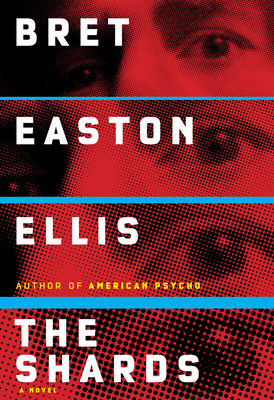
Title: The Shards
Author: Bret Easton Ellis
Published: 2023
Genre: fiction, literary fiction, thriller, horror
My Rating: 4/5 stars
The Premise
Synopsis (from Goodreads):
“17-year-old Bret is a senior at the exclusive Buckley prep school when a new student arrives with a mysterious past. Robert Mallory is bright, handsome, charismatic, and shielding a secret from Bret and his friends even as he becomes a part of their tightly knit circle. Bret’s obsession with Mallory is equaled only by his increasingly unsettling pre-occupation with The Trawler, a serial killer on the loose who seems to be drawing ever closer to Bret and his friends, taunting them–and Bret in particular–with grotesque threats and horrific, sharply local acts of violence. The coincidences are uncanny, but they are also filtered through the imagination of a teenager whose gifts for constructing narrative from the filaments of his own life are about to make him one of the most explosive literary sensations of his generation. Can he trust his friends–or his own mind–to make sense of the danger they appear to be in? Thwarted by the world and by his own innate desires, buffeted by unhealthy fixations, he spirals into paranoia and isolation as the relationship between The Trawler and Robert Mallory hurtles inexorably toward a collision.”
My Thoughts
Like Lunar Park (which I haven’t read yet unfortunately) The Shards is told from the perspective of Bret “himself.” It’s a rather bold pseudo-auto-fiction blending of satire and discomfort, recounting a “true story” of his senior year at some rich prep school in Los Angeles, involving:
- the friends he is secretly in love with but who are dating each other–Thom and Susan
- his “girlfriend” (girlfriend-in-name-only, you could say) whom he treats horribly–Debbie
- his two male situationships Matt and Ryan who he can’t be open about due to the homophobia of the 80s
- an a uber-hot new guy, Robert who Bret becomes unhealthily obsessed with
All the while, there is a serial killer called “The Trawler” going around and disappearing teenagers throughout the city, as well as a cult doing gruesome and ostentatious animal sacrifices. Tension grows as Bret finds himself increasingly suspicious of Robert’s intentions.
The first part of the book was a bit slow, with a lot of descriptions of fashion and teenagers doing drugs, hooking up and driving around in LA. I’ve never been to LA, so the street names meant nothing to me, and now that I am an adult it also makes me feel uncomfortable when books or movies portray explicit scenes involving canonically underage characters.
It started to pick up a lot more by about 60% through, but I think the beginning could have been significantly shortened.
The real meat of the book does not come until the end. So, on to the spoiler section of this review, aka My Theory of What Canonically Happened in This Story.
The Shards Ending Explained (My Interpretation)
The first major piece of the puzzle that is this book is the realization that Bret is not a reliable narrator.
Throughout the story, his narration is overly dramatic, constantly repeating to the reading how traumatizing and dark and scary this tale he’s telling us is about to be.
Who Actually Is Robert Mallory?
In my reading, Robert, as described in the book, was some type of psychological projection from Bret. Robert was a real person, since characters interacted with him independently of Bret, but the way he was described in the story is definitely embellished and off-mark from reality.
Bret’s repressed queerness makes him resent Robert, and this is especially clear at the end when Robert fakes sexual interest and then calls him a slur. Also, Robert takes Bret’s place in their high-status social circle, which intensifies the building animosity.
As Bret’s resentment increases and his obsession with Robert builds, he starts to spin the elaborate story of the Trawler and the cult. Meanwhile, his multiple failing relationships and out-of-control drug habits cause him to unravel.
Crucially, I think also that Bret projected all of his subconscious baggage onto the character of Robert in order to absolve himself from his own actions. As people have pointed out, Bret actually does most of the things he accuses Robert of.
For example: Bret is upset that Robert lied about being in the theater in 1980, when all the while Bret lies compulsively to everyone around him. Bret accuses Robert of stalking him, while in reality is it Bret who stalks Robert. And while Bret is disturbed by Robert’s sexual comments about Susan, Bret is also obsessed with Susan and thinks of her in a similar way.
Cracks in this self-protective facade begin to show themselves periodically in the narrative, however, like when Robert says to Bret: “When you talk to me you’re really talking to yourself, dude”
Who was the Trawler?
My hot take is that I think that the Trawler murders never happened, with the exception of Matt.
In my view, The Shards is about Bret’s descent into insanity and violence, and significant parts of the narrative are exaggerated (after all, we are constantly reminded of how big of an imagination Bret has, and I have already covered the evidence of him being an unreliable narrator with regard to Robert in particular.) The Trawler/cult bit in particular seems like pure background edgy fodder that Bret would make up to make the story more interesting, especially since we are never introduced to any of the Trawler’s victims in the narrative, and no one Bret tries to talk to about the Trawler knows what he is even talking about.
I do think that Bret genuinely killed Matt, pushed Terry off the balcony and attacked Susan and Thom at the end of the book, though.
I think that he killed Matt due to his anger about Matt ending their sexual relationship, which is further supported by Bret’s constant repetition that the snuff tape of Matt implicates Bret far more than Robert–another instance of “the truth” slipping through cracks in the narrative.
Second, that Bret pushed Terry off the balcony is likely not only because of Terry’s abuse of Bret, but also is pointed to by the narrative immediately blaming Robert, as well as the parallels between the balcony incident and Robert’s eventual death.
Bret being responsible for the attack on Susan and Thom is implied by the scene in the hospital, where Bret breaks Susan’s hand after she accuses him of being the masked intruder. I think he probably attacked them in order to have an excuse to frame Robert for something, unable to cope with Robert continuing to enjoy popularity after humiliating him and taking over his friend group.
Overall, the entire novel leads up to Bret murdering Robert, which is the only thing he truly “admits to” in the story as it stands. After Susan and Thom are attacked, Bret immediately breaks into Robert’s apartment, breaks the door to trap him inside, and gets into a knife fight with him. Bret pushes Robert off the balcony at the culmination of the fight, but lies to the authorities later, saying that Robert killed himself.
As mentioned before, the entire story is tinged with Bret’s psychological obsession with Robert, a boy who has the life that Bret wishes he could have but cannot have due to being a closeted queer man, and this is the lens through which I interpreted the narrative.
However, my issue is that upon finishing the novel, I still had no idea whether I interpreted it correctly or not. My confusion was honestly to the point where I wondered whether Bret Easton Ellis had a coherent plot in mind when writing it. Maybe there is a canonical explanation to be found out there somewhere on the Internet, but surely it could have been conveyed better within the text.
That said, Bret Easton Ellis is not a stranger to unresolved endings. American Psycho has a very similar ambiguity about whether its narrator is truthful about his own violent actions (which is something I am pretty sure I missed when I read that book a few years ago)
Anyway, my 4 stars remain for The Shards because I liked reading the book and enjoyed trying to piece it together.
Have you read The Shards by Bret Easton Ellis? If so, what did you think of it? Feel free to leave your thoughts in the comments below!
If you liked this post, consider subscribing to Frappes & Fiction. I post about the books I read (even if they’re not fiction), the books I think YOU should read, and anything else on my mind.
 Frappes and Fiction
Do you take book recommendations? If you do, would you ever read and/or review C.S. Lewis’ Pilgrims Regress?
LikeLike
I have actually reviewed some books by C.S. Lewis. Unfortunately I am personally not a fan. I appreciate the rec though
LikeLike