
 By
By Jeffrey Eugenides’s The Virgin Suicides is at once a lyrical portrait of 90s suburbia and a biting critique of how teenage girls are perceived by society.
About the Book
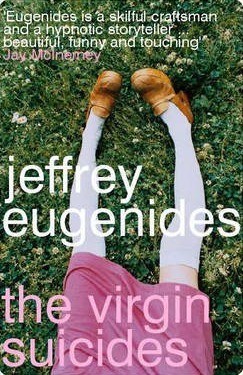
Title: The Virgin Suicides
Author: Jeffrey Eugenides
Published: 1993
Genre: fiction, literary fiction, realistic fiction
My Rating: 5/5 stars
The Premise
Synopsis (via Goodreads):
The shocking thing about the girls was how nearly normal they seemed when their mother let them out for the one and only date of their lives. Twenty years on, their enigmatic personalities are embalmed in the memories of the boys who worshipped them and who now recall their shared adolescence: the brassiere draped over a crucifix belonging to the promiscuous Lux; the sisters’ breathtaking appearance on the night of the dance; and the sultry, sleepy street across which they watched a family disintegrate and fragile lives disappear.
My Thoughts
A common accusation against The Virgin Suicides is that it romanticizes suicide. It does, but I believe that was in part the point of the story. I’m sure I’m not the only one who has when I was younger imagined what would happen if I were to commit suicide and what people would think about me when I was dead, despite having no real intention or desire to do it. And romanticization of mental illness and suicide is definitely a trend that warrants attention and criticism. On one hand, I think it is a coping mechanism; on the other, it is toxic and can negatively influence people.
At its core I think this book is about how people try to assign a grand purpose, meaning and mystique to senseless tragedy, and how young women are so often sexualized and fetishized. The anonymous male narrator being our only insight into the lives of the Lisbon sisters is what gives this book its romanticized quality, I think.
We knew that Cecilia had killed herself because she was a misfit, because the beyond called to her, and we knew that her sisters, once abandoned, felt her calling from that place, too. But even as we make these conclusions we feel our throats plugging up, because they are both true and untrue. So much has been written about the girls in the newspapers, so much has been said over backyard fences, or related over the years in psychiatrists’ offices, that we are certain only of the insufficiency of explanations.
The novel is peppered with outsiders’ perspectives on the Libson girls and why they did what they did, but no explanation works because no one bothered to ask the girls themselves. It gave the book an odd almost creepy quality because of the lack of resolution as to what drove them to suicide.
Instead of hearing their thoughts and feelings, we only get to hear about what the boys think of them, and their fetishized fascination with their daily lives. So nothing is ever resolved, and gradually the story is smoothed over and packaged into a narrative suitable for the American suburbia the departed Lisbons inhabited.
Finally, I must talk about the absolutely GORGEOUS writing. That’s why my rating on this book is so high– because the writing really just pulled it all together. It was one of those books whereupon I spent half the time wanting to cry because of how I know I could never write like that.
Have you read The Virgin Suicides by Jeffrey Eugenides? What did you think of it? Feel free to let me know in the comments!
If you liked this post, consider subscribing to Frappes & Fiction. I post about the books I read (even if they’re not fiction), the books I think YOU should read, and anything else on my mind.
 Frappes and Fiction